
Homeowner’s Checklist: Signs an Ice Dam Is Causing a Roof Leak in Maryland
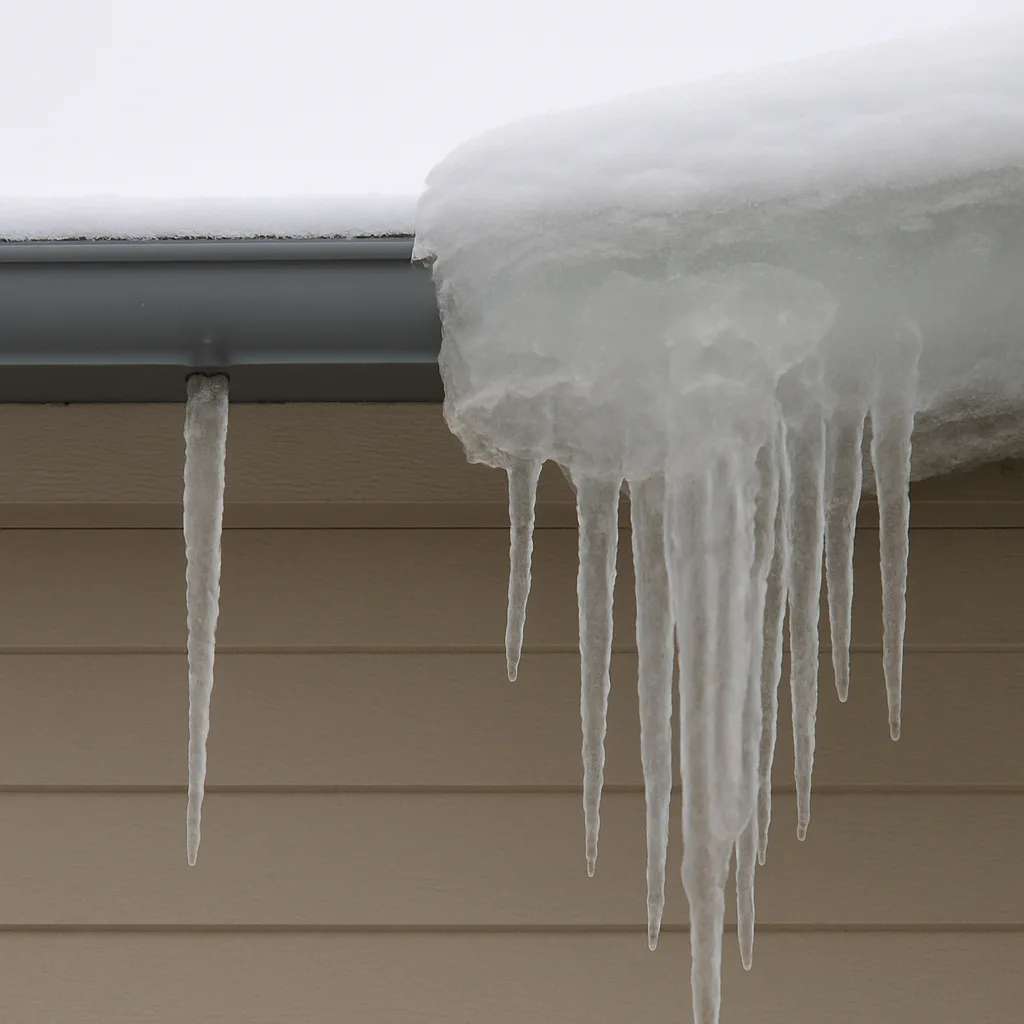
Seeing giant icicles hanging from your gutters in Maryland and all the surrounding areas? While they might look like a winter wonderland, they can signal a serious problem: an ice dam. These formations trap melting snow, forcing water under shingles and into your home, often appearing as a mysterious ceiling stain. But how can you tell if you have a harmless icicle or a damaging dam? This checklist helps you confidently assess the risk from the ground up.
The 5-Point Ice Dam Checklist: Spotting Trouble from the Ground
After a heavy snowfall, walk around your house as part of your regular winter roof maintenance and look for these five tell-tale signs of water damage from ice dams: A thick wall of ice on the roof’s edge, often right above the gutters.
- Icicles are forming behind the gutter or from the soffit (the underside of your roof’s overhang).
- Dark, wet-looking spots or ice appearing on your exterior siding.
- A new ceiling leak after snow melts or damp spots on interior walls.
- Frost or solid ice on the wood sheathing if you can safely peek into your attic.
If you see these issues, especially icicles forming where they shouldn’t be, you likely have an active ice dam.
What's Really Happening on Your Roof? The 'Clogged Drain' Analogy
The problem usually starts inside your house. When heat escapes into your attic, it melts snow on the roof from underneath. This is what causes ice dams on a roof and highlights the importance of roof insulation—it’s meant to keep heat in your living space, not the attic.
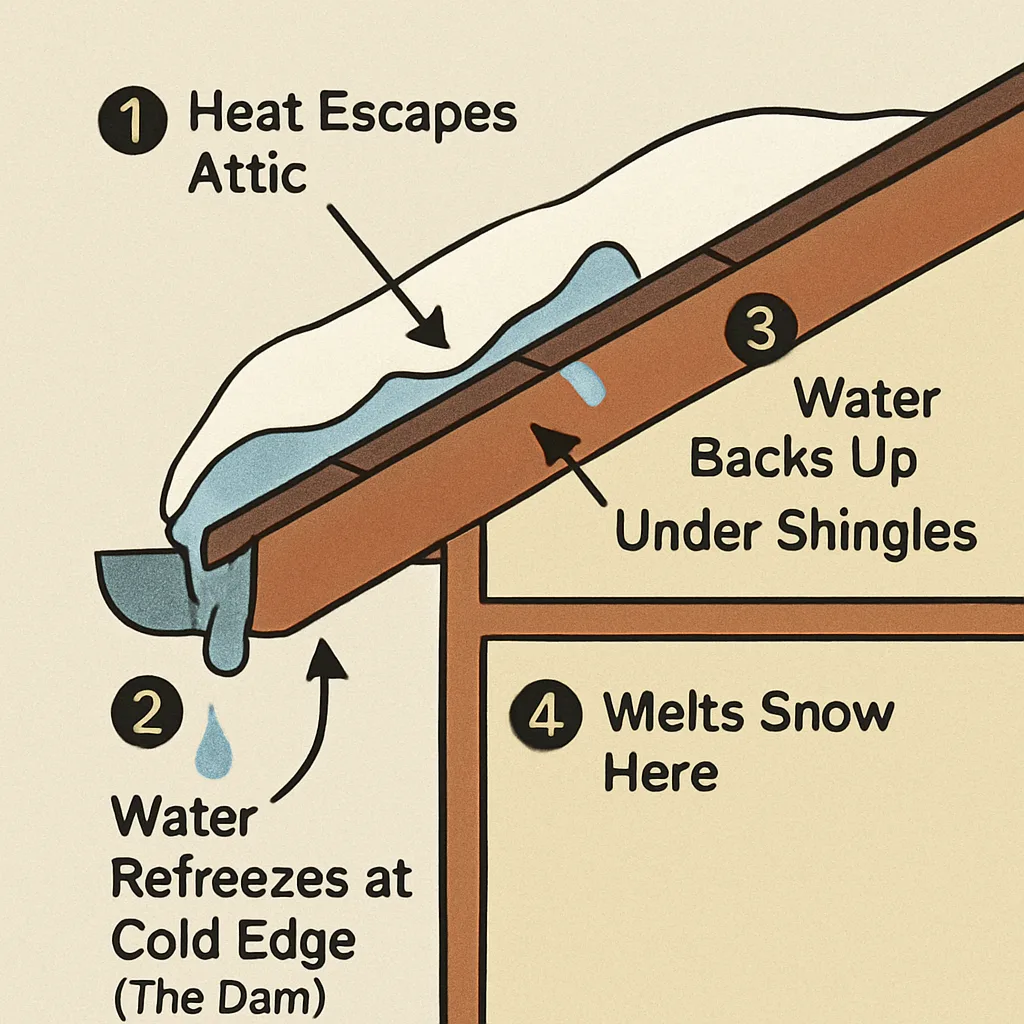
As the melted water runs down, it hits the freezing roof edge and refreezes, creating a thick ridge. Think of this dam like a clogged drain: water pools behind it, backing up under your shingles. While shingles shed water running down, they aren’t designed to stop water pushing up from below. This cycle shows why simply knocking off icicles won’t solve the problem. The real fix involves stopping heat loss with better insulation and proper attic ventilation.
First Aid for a Leaking Roof: Safe Actions to Take Immediately
If you have an active ice dam, your first goal is to stop feeding it water. The safest way is to use a roof rake from the ground to clear the first 3 to 4 feet of snow from the roof’s edge. Removing the snow—the fuel for the leak—can often stop it in its tracks. While that helps, it’s just as important to manage any water that’s already inside.
Here are the most critical ice dam removal methods to follow for a temporary fix for a leaking roof from ice:
DO: Place a bucket under interior drips and aim a fan at the damp ceiling to begin drying the area.
DON’T: Use rock salt or calcium chloride. These corrosive chemicals can damage your shingles, gutters, and any plants below.
DON’T: Use an axe or hammer to chop the ice. You are far more likely to damage your roof than remove the dam.
NEVER: Get on a ladder or the roof in icy conditions.
These first-aid steps help manage the immediate crisis but don’t solve the underlying problem.
The Long-Term Fix: How to Stop Ice Dams Before They Start
While temporary fixes help, prevention is the real goal. The key to preventing ice dams in Silver Spring, Columbia, MD, and Annapolis, MD, this winter is to keep your attic as cold as the air outside. A cold attic means a cold roof, which won’t melt the snow sitting on top of it.
This is achieved with three solutions working together: properly insulating the attic floor to keep heat in your home, air-sealing gaps around lights and pipes, and properly ventilating the attic to prevent ice dams that circulate cold air. You may have also seen zigzagging heat cables for roof pros and cons. While they create meltwater channels, they are a band-aid that treats symptoms with electricity instead of fixing the root cause: heat loss.
When to Call a Pro: Your Guide to Removal, Repair, and Insurance
When water is dripping into your home, call a roofer to assess the damage. For the long-term fix, you’ll need an insulation or weatherization contractor to address the heat loss. Hiring the right expert for the right job saves time and money.
If you need immediate ice removal, insist on a company that uses low-pressure steam. The debate over ice dam steaming vs hot water pressure washers is settled: high-pressure water or hammers can destroy shingles. Proper steaming safely melts the ice, making the professional ice dam removal cost worthwhile by preventing expensive repairs.
To find out whether homeowners’ insurance covers ice-dam damage, call your agent. Ask two specific questions: “Does my policy cover interior water damage from an ice dam?” and “Does it also cover the cost of removing the ice dam itself?” The answers are often different, and knowing both is critical.
Your Action Plan for an Ice-Dam-Free Home
You now have a clear, two-part action plan for your home.
Short-Term Safety Plan: Use your new knowledge to check for warning signs, safely rake snow from the ground, and call a professional immediately if you spot a leak.
Long-Term Prevention Plan: Schedule an attic energy audit to get a clear roadmap for improving insulation and air sealing.
An ice dam isn’t the real problem—it’s a symptom of heat loss. By focusing on prevention, you take control of your home’s health and secure your peace of mind all winter long. If you need any assistance, do not hesitate to contact HF Roofing Contractor for any roofing services needed, or give us a call at 301-674-4460